120 Lester Ln, Los Gatos, CA 95032
Mon-Sun 07:00 AM - 09:00 PM
120 Lester Ln, Los Gatos, CA 95032
Mon-Sun 07:00 AM - 09:00 PM
Post Image
03 Oct, 2025
Posted by smartwires

The Ultimate Guide to Choosing the Right EV Charger for Your Home

The moment you drive your new electric vehicle home is thrilling—until you realize the included charger feels a bit like filling a swimming pool with a garden hose. For many new EV owners, this is the first, and most critical, electrical upgrade they’ll face. Choosing the right home charger isn’t just about convenience; it’s about integrating your car seamlessly into your life.

This guide will demystify the world of EV chargers, helping you navigate the options from simple plug-in solutions to powerful hardwired units. We’ll break down the costs, the installation process, and the key features that matter, so you can make an informed decision with confidence.

Understanding the Basics – The Three Levels of EV Charging

Before we dive into which charger is right for you, it’s essential to understand the three distinct levels of charging. Think of them as different “gears” for powering your vehicle.

Level 1 Charging: The Convenient (But Slow) Backup

  • How it Works: This uses a standard 120-volt household outlet—the same kind you plug your phone and laptop into. The charger is typically the portable cord that came with your car.
  • Charging Speed: Painfully slow. You can expect to gain about 3-5 miles of range per hour of charging.
  • The Reality Check: A full overnight charge (12 hours) might only give you 40-60 miles of range. If you have a long commute or an unexpected errand-heavy day, you can easily deplete your battery faster than you can replenish it.
  • Best For:

    • Plug-in hybrid owners with smaller batteries.
    • EV owners with very short, predictable daily commutes (under 30 miles).
    • As a temporary or emergency backup solution.

The Story of our client Sarah, the Cautious Commuter: Sarah bought a plug-in hybrid and used her Level 1 charger for months. With a 20-mile daily round trip and a 40-mile electric range, it worked perfectly. But when she upgraded to a full electric vehicle with a 250-mile range, she quickly learned that recovering from a weekend trip could take two full days. Level 1 was no longer sufficient.

Level 2 Charging: The Homeowner’s Gold Standard

  • How it Works: This is a dedicated 240-volt circuit, similar to what powers your electric dryer or oven. It requires a professional installation of a new outlet (like a NEMA 14-50) or a hardwired connection directly to your electrical panel.
  • Charging Speed: Significantly faster. A Level 2 charger typically delivers 20-60 miles of range per hour.
  • The Game Changer: This speed means you can fully recharge your EV from empty overnight, often in just 4-8 hours. It transforms your EV from a source of “range anxiety” into the most convenient vehicle you’ve ever owned.
  • Best For:

    • Nearly every full battery electric vehicle (BEV) owner.
    • Anyone with a daily commute over 40 miles.
    • Two-EV households.
    • Homeowners who want the convenience of a “full tank” every morning.

The Heart of the Matter – Choosing Your Level 2 Charger

Since Level 2 is the ideal solution for most homeowners, let’s focus on the key decisions you’ll need to make.

Decision 1: Plug-In vs. Hardwired

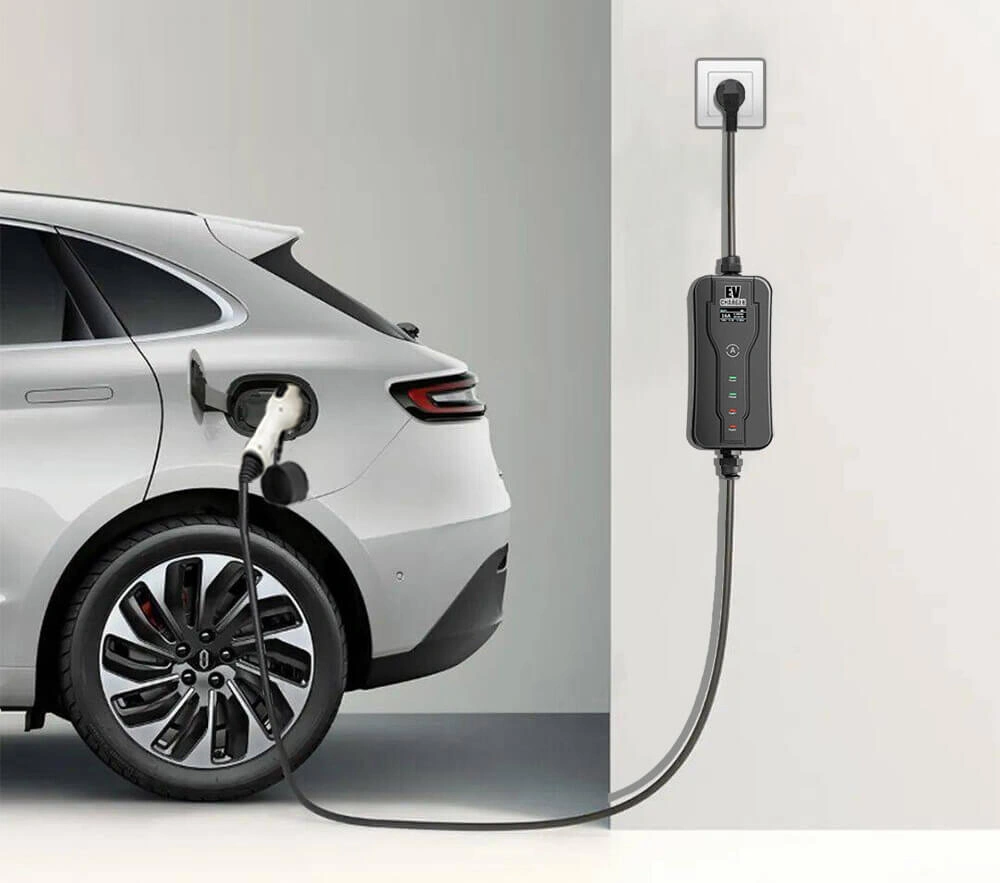
Plug-In Charger (with a NEMA 14-50 Outlet):

Plug-In Charger (with a NEMA 14-50 Outlet)


  • Pros: Offers flexibility. If you move, you can unplug your charger and take it with you. The installation can be slightly less expensive if an outlet already exists nearby.

  • Cons: The outlet itself is a potential point of failure; a poor-quality outlet can overheat with continuous use. It also limits your power output slightly (typically to 40 amps/9.6 kW).

Hardwired Charger:

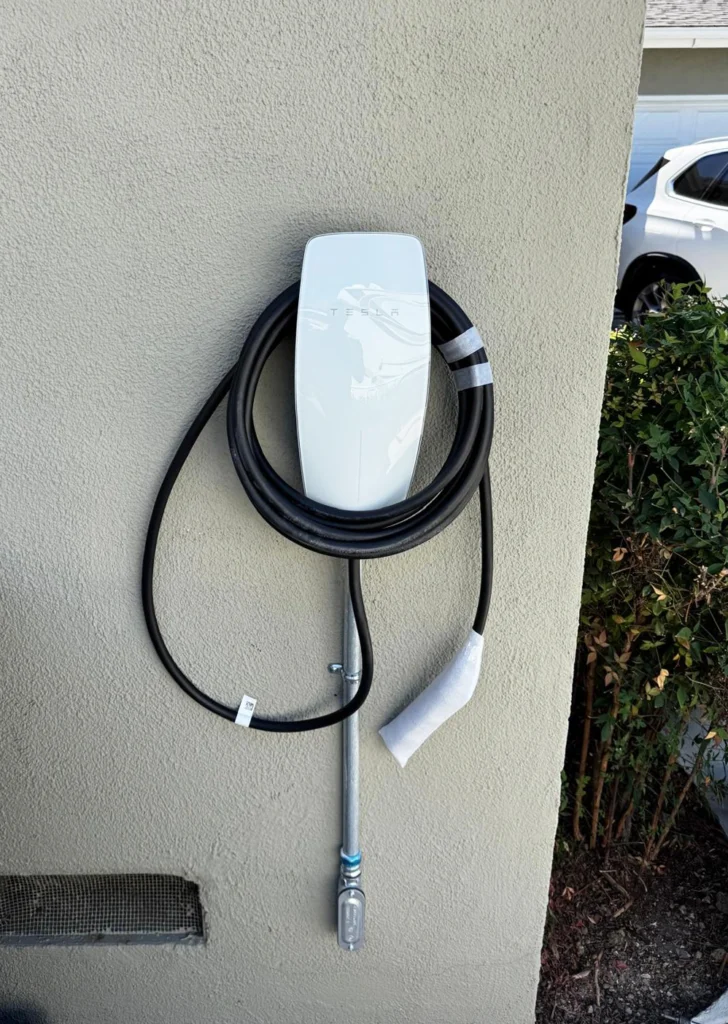
Tesla Wall Charger


  • Pros: Considered more robust, reliable, and safer because it has fewer connection points. It often allows for a slightly higher power output (48 amps/11.5 kW). It has a cleaner, more permanent look.

  • Cons: It is permanently attached to the wall. If the unit fails, a technician may need to disconnect it.

Our Recommendation: For a permanent home solution, a hardwired installation is generally the superior choice due to its enhanced safety and reliability.

Decision 2: Amperage – How Much Power Do You Need?

The amperage of your charger and your vehicle’s onboard charger determine your charging speed. It’s a two-way street; your car can only accept as much power as its internal charger can handle.


  • 16-32 Amps: Good for most daily needs, providing 12-25 miles of range per hour.

  • 40-48 Amps: The sweet spot for modern EVs. This will max out the charging capability of most current vehicles, providing 30-45 miles of range per hour.

Pro Tip: Check your car’s manual to see the maximum AC charge rate its onboard charger can accept. There’s no benefit to installing a 48-amp station if your car can only handle 32 amps. However, future-proofing for your next EV is a smart consideration.

Decision 3: Smart Features vs. Basic Functionality

Beyond the raw power of a Level 2 charger lies a critical choice: intelligence. This decision isn’t just about bells and whistles; it’s about how you want to interact with your vehicle’s energy consumption and integrate it into your household’s rhythm.

On one hand, you have the basic, or “dumb,” charger. This unit is a model of straightforward simplicity. It does one job exceptionally well: delivering power to your car the moment you plug it in. There are no apps to download, no networks to connect to, and no schedules to program. For many, this reliability is the ultimate feature. It’s a set-it-and-forget-it solution that appeals to those who value function over frills and want a no-fuss experience. You plug in, and it charges—it’s as simple as that.

On the other hand, the smart charger acts as an intelligent energy manager for your EV. By connecting to your home Wi-Fi, it opens up a world of control and optimization that can save you money and provide valuable peace of mind. One of the most powerful features is the ability to schedule charging sessions. Instead of charging immediately when you get home at 6 PM during peak electricity rates, you can program your charger to start automatically after 11 PM when utility rates drop. This simple automation can translate into significant savings on your monthly power bill without you ever having to think about it.

Furthermore, smart chargers bring a new level of awareness to your energy use. Through a companion smartphone app, you can monitor exactly how much electricity your car consumes each session, track costs over time, and even receive notifications when charging is complete or if it’s interrupted. For households with multiple drivers, some models allow you to set different access levels or track individual usage. Perhaps most importantly, a smart charger is a device that can improve over time. Manufacturers can push firmware updates—just like on your phone—to add new features, improve security, and enhance performance long after the initial installation.

The Installation – Why a Professional is Non-Negotiable

This is the most critical part of the process. Installing a Level 2 charger is not a DIY project.

The Role of a Licensed Electrician (Like Smart Wires)

  • Electrical Panel Assessment: We will determine if your panel has the capacity to handle a new 240-volt circuit. Older homes may require a panel upgrade—a crucial safety step that cannot be overlooked.
  • Permitting & Codes: We handle all local permitting and ensure the installation meets National Electrical Code (NEC) standards, including required safety disconnects.
  • Proper Installation: From running the correct gauge of wire to installing a weatherproof outdoor enclosure (if needed), we ensure your charger is installed safely and built to last.

What Impacts the Cost of Installation?

  • Panel Capacity: A simple installation with available capacity might cost $500 – $1,200. If a panel upgrade is needed, this can range from $2,500 – $5,000, not including permit fees.
  • Permit Fees: Vary by city but typically range from $1,000 – $2,000.
  • Cable Run: The distance from your electrical panel to your charging location significantly impacts the cost due to materials and labor.

Conclusion: Your Path to Effortless EV Ownership

Choosing the right EV charger boils down to a simple question: How do you want to live with your electric vehicle?

If you value convenience, speed, and seamless integration into your daily routine, a hardwired Level 2 smart charger is the undeniable winner.

The investment you make today not only enhances your daily life but also future-proofs your home for the electric era.

At Smart Wires, we don’t just install chargers; we design charging solutions tailored to your home, your vehicle, and your lifestyle. From the initial assessment to the final connection, we ensure your transition to electric driving is smooth, safe, and empowering.

Ready to power up your EV? Contact Smart Wires today for a free, no-obligation consultation and quote.

Leave a Comment

Your email address will not be published.*